What Is AI SEO and How Does It Work in 2026?
April 6, 2026
Can Powerful SEO Content Really Transform Business Growth? See 18 Real Examples That Prove It Can
May 7, 2026From Celtic Tiger to AI Search: How 3R Mastered SEO Before It Was Cool — And Why That Matters
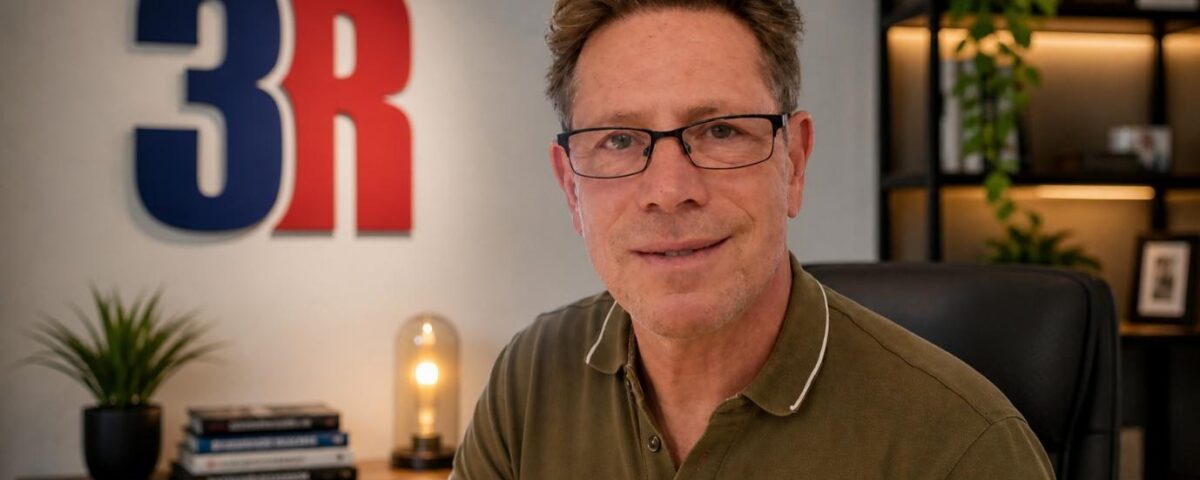
By Peter Lawless, Founder, 3R
This Is My Story from the Founding of 3R to today!
3R began in 2004 as a sales and marketing consultancy during one of the most exciting periods in Irish business history — the Celtic Tiger years. Back then, growth felt unstoppable, businesses were expanding rapidly, and the demand for experienced sales and marketing leadership was immense. What began as traditional strategy work soon evolved into something much bigger — a journey through search, SEO, and now artificial intelligence.
If you’re reading this article, I want you to understand something important from the very beginning — this is my story. This is my passion. This is my life’s work. Yes, AI has helped structure and optimise this article so that it can be found, but the experience behind it is real, earned, and lived. Because what’s the point in writing something valuable if nobody ever finds it? That’s exactly what we solve for our clients every day.
TL;DR — What This Article Is Really About
3R began in 2004 during the Celtic Tiger, survived the 2008 crash, and evolved from a sales consultancy into an SEO and AI search authority. With over 20 years of experience, we help businesses stop being invisible online and turn visibility into real enquiries and customers through Google and AI search.
How Did 3R Begin During the Celtic Tiger — And Why Was That Timing So Important?
I started 3R in 2004, right in the middle of Ireland’s Celtic Tiger boom. It was an extraordinary time. Businesses were growing quickly, expanding into new markets, hiring aggressively, and full of confidence about the future. Many of them were eager to invest in expertise that could help them grow even faster.
At that time, my work focused heavily on sales leadership and marketing strategy. Companies were happy to bring in someone with international experience — someone who understood structured sales processes, market positioning, negotiation strategies, and long-term growth planning. My role was to help them build systems that allowed their businesses to scale in a predictable and structured way.
Back then, the internet existed, but it wasn’t yet the dominant commercial force it would later become. Websites were simple. Online marketing was still emerging. Nobody yet realised just how much search engines would reshape the world of business.
But quietly, in the background, something important was beginning to form.
How Did Simona Become Part of the 3R Story — And Why Does She Matter So Much?
In 2007, something happened that would shape the future of the company in ways I could never have fully predicted at the time. A master’s student named Simona joined the business as an intern. Like many internships, it began modestly — learning, supporting, contributing where she could. But what stood out almost immediately was her commitment, her attention to detail, and her natural ability to organise complex processes.
Simona never left.
She stayed, grew, learned, and evolved with the company. Today, she holds a role equivalent to Chief Operations Officer, and quite frankly, she commands what I often call the engine room of 3R. She is the interface between our clients, our staff, and our subcontractors. She ensures that every project moves forward smoothly, that communication remains clear, and that every client receives the standard of work they truly deserve.
No company succeeds alone. People make the difference. And Simona has been one of the defining constants in the journey of 3R since 2007.
What Happened When the Global Financial Crash Hit in 2008?
Then came 2008, and with it, the Global Financial Crisis — one of the most dramatic turning points in modern business history. Almost overnight, the landscape changed. Growth slowed. Budgets vanished. Confidence dropped sharply. Businesses that had once thrived suddenly struggled to survive.
Like many others, we felt the impact. Leads began to dry up. Opportunities became scarce. Companies that had once been expanding were now cutting back. It forced many of us to rethink not just strategy — but survival.
Around that same time, I achieved something else that would later prove incredibly valuable. In 2008, I became a Master Practitioner of NLP — Neuro Linguistic Programming. This wasn’t about computers or artificial intelligence. It was about people. NLP is the science and art of persuasion — understanding communication, behaviour, emotional triggers, and the psychology behind decision-making.
It taught me how to:
- Write persuasive copy
- Understand emotional drivers
- Build trust through communication
- Coach individuals to achieve extraordinary outcomes
I also worked as a coach during this period, helping individuals push beyond limitations and achieve results they never thought possible. All of that experience — the psychology of persuasion, the emotional triggers behind buying decisions — is now built into the content models we use today. Not just SEO-ready content, but human-ready content.
How Did One Phone Call Change the Direction of 3R Forever?
During that difficult period after the crash, one phone call changed everything.
Like every client conversation I had ever conducted, I followed a structured approach. I asked questions. I listened carefully. I tried to understand what they really wanted — not what they thought they wanted, but what they truly needed.
And their answer was simple:
They wanted their business to appear at the top of Google — just like mine did.
At that time, 3R ranked number one for:
- Sales Consultant
- Marketing Consultant
- Sales and Marketing Strategy
That moment created absolute clarity: Businesses didn’t just want strategy anymore. They wanted visibility. And visibility was happening in search.
How Did SEO Become the Foundation of the 3R Journey?
From that moment forward — now 18 years ago — SEO became central to our work.
In the early days, SEO was technical, manual, and deeply educational. We learned how search engines interpreted content. We learned how structure influenced ranking. We learned how language influenced visibility.
We worked carefully through the fundamentals:
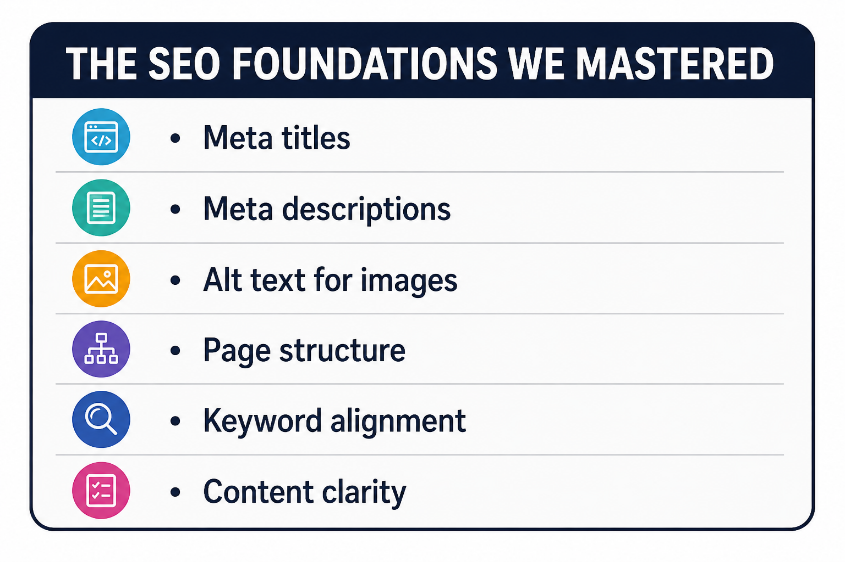
These weren’t shortcuts. They were foundational principles — and those same principles still apply today, even in the age of AI.
How Did Google’s Algorithm Updates Change Everything?
Over time, Google introduced major algorithm updates that reshaped the search landscape.
Among the most significant were:
- Panda (2011) — targeting poor-quality content
- Penguin (2012) — targeting spammy backlinks
- Hummingbird (2013) — improving search understanding
- RankBrain (2015) — introducing machine learning
- BERT (2019) — improving language understanding
- Helpful Content Updates (2022 onwards) — prioritising real value
Each update changed the rules. Each update created new challenges. And each update reinforced one central truth: Shortcuts never last.
Why Did We Always Choose White Hat SEO?
There was a time when black hat SEO dominated the industry. Link farms promised fast results. Cheap SEO packages flooded the market. Some offered thousands of backlinks for very little money.
But those shortcuts carried risk.
- Google learned.
- Penalties followed.
- Websites disappeared.
- Businesses lost visibility overnight.
We chose a different path.
We chose White Hat SEO — ethical, structured, long-term optimisation that focused on value rather than manipulation. That decision protected our clients and allowed them to build sustainable visibility rather than temporary spikes.
How Did Early Interest in AI Shape the Future Direction of 3R?
My interest in artificial intelligence didn’t begin recently.
It began in 1986.
Yes — nearly forty years ago — when I attended a conference on the future of AI in medicine. At the time, it felt futuristic and distant, but the idea never left me.
Years later, when OpenAI emerged, the pace of change accelerated dramatically. We began experimenting with early AI writing tools such as Jasper, which connected to early OpenAI systems. That experimentation allowed us to understand how large language models worked — not just technically, but strategically.
We recognised something very important:
When AI became mainstream, SEO would change completely. So we prepared early.
How Did Custom GPTs Transform the Way We Create Content?
When ChatGPT launched, we didn’t treat it as entertainment.
We treated it as infrastructure.
We began building our own custom GPT systems, embedding years of experience into structured frameworks. These systems were not random prompt generators. They were carefully designed tools built from decades of knowledge in:
- Sales psychology
- Marketing strategy
- SEO structure
- Client communication
All of this aligned perfectly with Google’s E-E-A-T framework:
- Experience
- Expertise
- Authoritativeness
- Trustworthiness
These principles are now at the heart of modern visibility.
Why Is AI Citation Now Essential for Modern Visibility?
Today, visibility is no longer just about ranking on Google.
It’s about being cited.
Businesses must now be visible across multiple platforms, including:
- ChatGPT
- Gemini
- Perplexity
- Claude
- DeepSeek
Being cited means being trusted. And being trusted means being structured correctly, written clearly, and backed by real authority.
That’s what we help clients achieve today.
What Does the Name 3R Really Mean — And Where Did It Come From?
The name 3R has roots in Irish history.
In early Irish education, the three Rs referred to:
- Readin’ (Reading)
- Ritin’ (Writing)
- Ritmatic (Arithmetic or Maths)
Those were the foundations of education — the basics required to function in society.
Today, the meaning of the 3Rs has evolved.
For us, they represent:
- Relevance
- Reach
- Results
In simple terms:
Are we creating relevant content
that reaches the right people
to deliver real results?
That question drives everything we do.
This Is My Story, My Passion, My Commitment
If you’re reading this article, then you’re reading something deeply personal.
This isn’t theory. This isn’t recycled marketing language. This is lived experience.
This is the story of a business that began in 2004, survived a global crash, adapted through every algorithm update, embraced artificial intelligence early, and continues to evolve today.
Yes — AI helped optimise this article.
- But the thinking behind it is human.
- The passion behind it is human.
- The commitment behind it is human.
- And the partnership we build with clients is human.
Because our role is simple:
- You focus on running your business.
- We focus on making sure people can find it.
- And when people can find you — they can choose you.
That has always been true. And it always will be.
Please don’t contact us unless you want a company who is passionate and will help you fly.