17 Essential Answers: How to Succeed in AI SEO, Google SGE & AI Overviews in 2025
September 7, 2025
Does Content Really Matter for SEO? These 16 Articles Prove It Absolutely Does!
October 26, 2025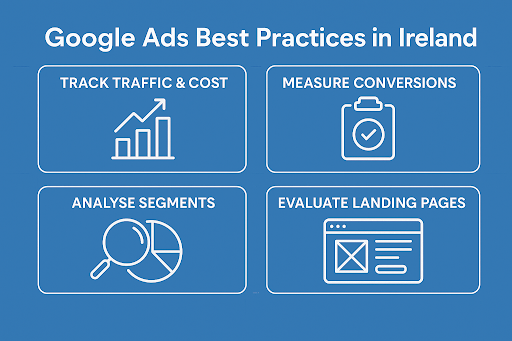
Want better results from your Google Ads in Ireland? Start by improving how you track, measure, and report performance. This guide breaks down the essential metrics you need to monitor — and why they matter.
Google Ads is one of the most powerful tools for growing your business online—but only if you’re measuring the right things. Too often, businesses focus on surface-level stats like clicks or impressions, without connecting them to actual revenue, leads, or long-term value. In this guide, you’ll learn how to go beyond basic dashboards and unlock the real drivers of campaign success.
We’ll walk you through the key metrics every Irish business should track—like CTR, cost per conversion, ROAS, CAC, CLV, and more. You’ll discover how to connect Google Ads with GA4, how to use segmentation and attribution, and how to explain these insights clearly to stakeholders. From landing page engagement to ad creative testing, we’ll help you turn reports into revenue.
Ready to take the guesswork out of your Google Ads strategy? Let’s get started. We have a glossary of terms at the end of the document.
What Should You Track in Google Ads Reports to Improve Campaign Performance?
To make better decisions, your Google Ads reports must go beyond surface stats. Track and interpret traffic, costs, conversions, revenue, return on ad spend (ROAS), customer acquisition cost (CAC), and lifetime value (CLV). These metrics work together to highlight what’s driving ROI—and what’s holding it back.
How Can You Identify Gaps in Google Ads Reporting?
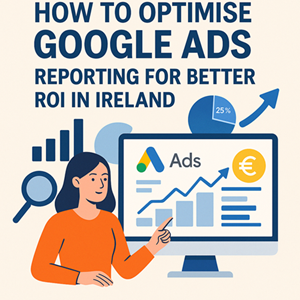
Use custom dashboards and GA4 integrations to uncover blind spots. Many default reports overlook things like assisted conversions, attribution paths, or device-level insights. Fill these gaps to create a reporting system that reflects the full customer journey.
Why Should You Link Google Ads to Google Analytics 4 (GA4)?
GA4 gives you visibility into post-click activity, revealing what users do once they land on your site. This helps identify drop-off points, compare traffic quality, and track micro-conversions that aren’t visible in Google Ads alone.
Why Should You Map Metrics to Business Goals?
Vanity metrics like impressions or even clicks mean little without context. Align your reports to real-world KPIs—like sales, qualified leads, average order value, and customer retention—so that marketing can directly support business growth.
What Are Common Mistakes in Google Ads Reporting?
- Reporting only at campaign level without digging into keywords or devices
- Focusing on last-click attribution only
- Ignoring assisted conversions or customer journey insights
- Tracking too many vanity metrics without action-oriented context
How Do You Present Google Ads Reports to Stakeholders?
Use clear visuals and narrative storytelling to highlight what’s working, where spend is inefficient, and what actions will improve performance. Focus less on technical metrics and more on trends, outcomes, and next steps.
Great reporting isn’t about more data—it’s about more clarity. Let 3R build a smarter reporting framework for your business that connects the dots between ad spend and real business results.
How Do You Measure Traffic and Reach in Google Ads Campaigns?
To measure visibility and interest, track Impressions, Clicks, and CTR. These show how often your ads are shown and how many users actually click, helping you optimise ad creative and audience targeting.
-
How Do You Measure Traffic and Reach in Google Ads Campaigns?
Understanding traffic and reach helps you assess whether your ads are being seen and acted upon. Key metrics like impressions, clicks, and click-through rate (CTR) give you a performance snapshot. These indicators tell you if your ads are visible, appealing, and attracting the right users.
-
What Does a Low CTR in Google Ads Indicate?
A CTR below 1% often signals poor targeting, irrelevant messaging, or lack of urgency. It may also mean your ads aren’t standing out against competitors. Always review your ad creative and alignment with search intent.
-
How Can You Improve CTR in Google Ads?
Test headlines that address pain points, include numbers or questions, and introduce urgency. Use capitalised first letters in headlines, include strong CTAs, and ensure your ads answer the user’s query.
-
How Do You Benchmark Traffic and Visibility Metrics?
Compare your Impressions and CTR against:
- Google Ads industry benchmarks
- Competitor share (via Auction Insights)
- Your own historical campaign data
- This helps you identify performance shifts, ad fatigue, or keyword saturation.
Traffic without clicks is just noise. Let 3R help you craft ads that cut through the clutter and earn attention from the right audience.
How Can You Evaluate Cost Efficiency in Google Ads?
Cost metrics like cost per click (CPC), cost per mille (CPM), and cost per conversion determine whether you’re spending smart or wasting budget. Efficient campaigns drive qualified traffic and conversions at a manageable cost per result.
What Is a Good Cost Per Click for Google Ads in Ireland?
CPC varies by industry and competition, but most businesses aim for a CPC that stays under 20–30% of their average profit per sale. Balance CPC with conversion rate and AOV to calculate true efficiency.
How Do Bid Strategies Affect Google Ads Efficiency?
Smart Bidding strategies (like Maximise Conversions or Target CPA) use Google’s machine learning to adjust bids in real-time. These help you reduce manual work and scale faster, especially when paired with conversion tracking.
How Do You Compare Cost Efficiency Across Campaigns?
Look at:
- Cost per conversion by campaign
- CPC by keyword or device
- CPM for brand or awareness campaigns
- Conversion lag (time from click to action)
This breakdown highlights which segments are cost-effective—and which aren’t pulling their weight.
Want to lower costs and raise returns? Get 3R to review your bidding strategy and cost metrics—we’ll help you cut waste and scale what works.
What Are the Most Important Conversion Metrics in Google Ads?
Conversions alone don’t tell the whole story. To understand true performance, you need to measure conversion rate, cost per conversion, click-through rate, customer lifetime value (CLV), and assisted conversions. Together, these reveal how well your campaigns drive both action and profit.
What Is a Good Conversion Rate in Google Ads?
Conversion rates vary by industry, but 3–5% is a strong benchmark. Higher rates suggest your landing page, offer, and targeting are tightly aligned with user intent.Why Is Click-Through Rate (CTR)
Different from Conversion Rate?CTR measures how many people click on your ad, while conversion rate measures how many of those clicks take action (like buying or signing up). High CTR with low conversions often signals a landing page or offer problem.What Does Cost Per Conversion Tell You?
Cost per conversion reveals how much you’re paying to acquire a lead or sale. It’s one of the clearest indicators of campaign efficiency. Lower costs typically reflect better targeting, ad creative, and user experience.Why Does Customer Lifetime Value (CLV) Matter in Google Ads?
CLV shows the total value a customer brings over time. If you know your CLV, you can afford to spend more upfront (on ads or cost per conversion) and still remain profitable in the long run.Why Are Assisted Conversions Important in Google Ads?
Assisted conversions credit ads that weren’t the final click but helped a user along their journey. This shows the value of upper-funnel campaigns and justifies brand-building or educational ads.Why Should You Segment Conversions by Campaign or Device?
Segmenting lets you spot where performance excels—or struggles. For example, if mobile conversions are low but desktop is strong, you might improve mobile UX or pause certain device placements.How Can You Explain These Metrics to a Non-Technical Stakeholder?
Use plain language: “We’re not just looking at clicks. We’re measuring how much each click costs us, how often those clicks lead to sales, and how much value we gain from each customer long-term.”
Want clarity on what’s driving real ROI in your Google Ads? Book a strategy session with 3R and let us help you decode your conversion data—and turn it into a growth plan.
How Do You Measure Revenue and ROAS in Google Ads?
To determine if your Google Ads campaigns are profitable, focus on revenue, return on ad spend (ROAS), average order value (AOV), and customer lifetime value (CLV). Together, these show whether you’re generating enough value to justify your spend—and guide smarter decisions on budget and bidding.
What Is a Good ROAS Benchmark in Google Ads?
A ROAS of 4:1 (or €4 in revenue for every €1 spent) is a solid benchmark for most industries. If your ROAS is below 3:1, review your targeting, ad messaging, and landing page performance to boost returns.
How Can You Increase Average Order Value from Google Ads?
Increase AOV by:
- Adding bundle offers or upsells on product pages
- Using extensions or sitelinks to highlight premium products
- Targeting high-value keywords that imply commercial intent
What Role Does CLV Play in Google Ads Profitability?
Customer lifetime value (CLV) reflects the total value a customer delivers over their entire relationship with your brand. When CLV is high, you can afford a higher cost per acquisition—especially in subscription models, B2B, or high-ticket services.
How Can You Optimise Bids Based on ROAS or CLV?
Use Smart Bidding strategies like Target ROAS to automatically adjust bids based on expected conversion value. When paired with CLV data, this allows you to compete more aggressively for high-value users.
Why Should You Track Revenue by Campaign or Keyword?
Not all traffic is equal. Break down revenue by campaign, ad group, or even keyword to identify which assets are driving real revenue—not just clicks or leads.
Want to boost revenue while controlling your ad spend? Let 3R audit your ROAS and customer value metrics—we’ll help you build a smarter, more scalable paid strategy. Just check out our Google Ads Testimonials!
How Do You Analyse Customer Acquisition with Google Ads?
Customer acquisition metrics show whether you’re bringing in new users—and doing so efficiently. The key metrics here include new users, customer acquisition cost (CAC), and lifetime value (CLV). Evaluating these together ensures you’re not just growing traffic but acquiring profitable customers.
What’s a Healthy Customer Acquisition Cost (CAC)?
A healthy CAC is one that remains well below your average customer lifetime value (CLV). For example, if your CLV is €1,000, keeping CAC under €250–€300 leaves healthy room for ad spend and profit.
How Can You Lower CAC in Google Ads?
Lower CAC by:
- Tightening targeting with audience lists and exclusions
- Using high-intent keywords and strong negative keyword lists
- Testing landing pages and improving conversion rate
- Using remarketing to re-engage cheaper, warmer leads
How Does CAC Compare Across Campaign Types?
Search campaigns typically deliver lower CAC than Display or YouTube due to higher intent. However, video and Display may assist conversions. Always assess CAC in the context of your funnel and attribution model.
Why Should You Track New vs Returning Users in Google Ads?
Tracking new vs returning users helps identify if your campaigns are attracting fresh prospects or just re-engaging existing ones. If growth is a goal, this split is critical for assessing true acquisition.
What Does a Rising CAC Tell You About Your Campaigns?
If CAC is increasing over time, it may signal rising keyword competition, ad fatigue, or audience saturation. Refresh creative, explore new audience segments, or revise bid strategies accordingly.
Want to grow smarter, not just spend harder?Schedule a call with 3R to review your customer acquisition strategy and ensure you’re investing in long-term value—not just short-term clicks.
What Metrics Reveal Google Ads Traffic Quality?
Traffic quality is more than just clicks—it’s about what happens after the click. Metrics like bounce rate, session duration, and exit rate reveal how relevant and valuable your ads are to real users. Good traffic sticks around, engages, and converts.
How Do Bounce Rate and Time on Site Impact Quality Scores?
Low engagement (high bounce, short sessions) reduces your Quality Score. Google assumes that if users don’t stay, your ad or landing page isn’t helpful—raising your cost per click. Fix this with better alignment between ad copy and landing page.
How Can Exit Rate Help Improve Landing Pages?
Exit rate shows where users leave your site. If users consistently drop off from the same page, it’s a signal to optimise layout, calls-to-action, or content flow. Identify and fix top exit pages to improve funnel progression.
What Is a Healthy Bounce Rate for Google Ads Traffic?
A bounce rate below 50% is a good benchmark for most campaigns. Higher than that suggests you’re attracting the wrong users—or the right users landing on the wrong page.
How Should a Google Ads Manager Explain Traffic Quality to Their Boss?
Frame it in business terms: “We’re getting clicks, but the post-click behaviour suggests we’re paying for traffic that doesn’t convert. By improving relevance and experience, we can reduce wasted spend and get better ROI.”
How Would 3R Explain Traffic Quality Insights to a Client?
At 3R, we’d show clients session-level data and heatmaps to explain what’s happening after a user clicks. We link ad intent to on-page behaviour and recommend concrete fixes to improve engagement and conversion—so every click counts.
Want more of the right traffic—and less of the wasted kind? Talk to 3R about improving your Google Ads traffic quality. We’ll help you turn clicks into loyal customers. Book your Free Consultation today.
How Should You Segment Google Ads Data for Better Insights?
Segment data by device, channel, location, and time to uncover performance patterns. Go deeper by analysing audience demographics, competitors, and impression share. These insights let you optimise budgets, improve targeting, and boost ROI.
Why Is Device Segmentation Important in Google Ads?
Mobile and desktop users behave differently. Segmenting by device helps you tailor bids and creatives to suit each experience and ensure optimal conversion paths across platforms.
What Time-of-Day Data Can Reveal About Your Google Ads?
Some ads convert better at certain times. Time-of-day reports let you schedule your ads to show when users are most likely to convert, preventing wasted impressions and boosting efficiency.
How Do Geographic Segments Improve Campaign Results?
Geographic data shows which regions convert better, allowing you to focus budget on high-performing locations, tailor messaging to local audiences, and exclude low-value areas.
Why Should You Track Impressions and Impression Share by Segment?
Impression data shows how often your ad is seen, while impression share reveals how much of the available market you’re capturing. Segment this by campaign, location, or device to spot growth opportunities.
How Can You Use Competitor Insights in Google Ads Segmentation?
The Auction Insights report shows who you’re competing against and how often they outrank you. Segment this by campaign or ad group to inform strategy and benchmark your visibility.
What Can Demographic Segments Tell You About Campaign Effectiveness?
Segmenting by age, gender, parental status, or household income helps you identify which demographics are converting. Refine your targeting and ad creative to match your top-converting audiences.
Want to unlock more ROI from your segments? Explore how 3R uses segmentation and smart bidding to drive Google Ads success in Ireland—get more from every euro spent.
How Do You Evaluate Landing Page Performance for Google Ads?
Landing pages must convert clicks into action. Track bounce rate, exit pages and scroll depth to see if users find your content valuable and know where to go next. A high-performing landing page aligns with ad messaging, loads fast, answers questions, and builds trust.
What Does Scroll Depth Tell You About Landing Page Effectiveness?
Scroll depth shows how far users engage with your page. Low scroll rates often signal content overload, poor page structure, or lack of immediate value above the fold.
How Can You Reduce Bounce Rate on a Google Ads Landing Page?
Match landing page messaging closely to ad intent, reduce load time, simplify calls to action, and ensure your offer is clear within the first few seconds of arrival.
What Tools Help Measure Landing Page Engagement?
Tools like Hotjar, GA4 Event Tracking, and Microsoft Clarity show how users move through your landing pages, helping identify friction points and content that needs improving.
How Can Adding FAQs Improve Landing Page Performance?
Including a short, targeted FAQ section can reduce bounce rate and increase engagement. It anticipates objections, improves SEO, and reassures users who are close to converting.
What Is the Role of Schema Markup on Google Ads Landing Pages?
Schema markup helps search engines understand your content better. For FAQs, reviews, and local business info, schema can improve rich results and increase post-click trust.
Why Should You Optimise Above-the-Fold Content on Landing Pages?
Above-the-fold content should instantly convey your offer, its value, and what action to take next. Use bold headings, subtext, trust badges, and a clear CTA to engage users immediately.
How Does Trust-Building Content Affect Landing Page Success?
Elements like testimonials, reviews, guarantees, and privacy reassurances reduce friction and increase confidence, especially for first-time visitors from paid ads.
Want high-converting landing pages for your Google Ads?See how we optimise landing pages for better ROI with clear messaging, fast load speeds, FAQs, and schema—tailored for Irish audiences.
What Can Google Ads Tell You About Ad Creative Performance?
Track how different headlines, descriptions and visuals perform. Focus on ads with higher CTR and conversion rates and pause or rewrite underperforming ones. Creative testing should be ongoing to keep ads fresh and aligned with audience behaviour.
What Makes a High-Converting Google Ad Creative?
Clear messaging, emotional triggers, urgency, and strong calls-to-action all boost ad performance. Align ad copy closely with search intent and make the value proposition obvious within the first few words.
Why Should You Use Multiple Ad Variants?
Running multiple variants lets you A/B test headlines, CTAs, and visuals. Google then serves the best performers more often, which improves campaign efficiency and reduces wasted spend.
How Do Headlines Impact Ad Performance in Google Ads?
Headlines are often the first element users notice. Short, benefit-led headlines with numbers, questions, or urgency tend to generate higher CTRs and better engagement.
What Role Do Descriptions Play in Google Ads CTR?
Descriptions support the headline by expanding on the offer and encouraging action. Use persuasive language, customer benefits, and direct CTAs to boost click-through rates.
How Important Are Visuals in Display and Video Campaigns?
In Display and YouTube campaigns, visuals make or break performance. Bright colours, clean layout, and strong brand elements improve recognition and click-through potential.
How Do Responsive Search Ads Improve Creative Performance?
Responsive search ads automatically test combinations of headlines and descriptions. This allows Google to optimise performance based on audience and context over time.
When Should You Retire or Refresh Ad Creative?
Monitor ad fatigue by watching for declining CTR and conversion rates. Rotate creative every 4–6 weeks or based on impression caps to keep audiences engaged.
How Do You Track Trends and A/B Testing in Google Ads?
Use trends and tests to evolve your strategy. Watch for shifts in cost or conversion rate and use structured experiments to validate changes before scaling. Regular analysis helps avoid wasting budget on poor performers and reveals what truly drives ROI.
What Can You Learn from Change History in Google Ads?
Change History lets you track exactly what was altered in a campaign and when. This helps pinpoint what changes helped or harmed results, allowing for faster course correction and better campaign management.
How Do You Run Effective A/B Tests in Google Ads?
Use Google Ads Experiments to run split tests on audiences, creatives, or bidding. Test one variable at a time for clean results. Avoid overlapping experiments and run tests for at least two weeks to collect statistically meaningful data.
Why Should You Monitor Campaign Trends Over Time?
Monitoring weekly or monthly trends in CPC, CTR, conversion rate, and ROAS helps you identify seasonality, audience fatigue, or algorithm shifts. Use these insights to adapt bidding strategies and messaging.
What Are the Most Impactful Elements to A/B Test in Google Ads?
Start by testing headlines, descriptions, and calls-to-action. Then explore landing page variations, different ad formats (text vs. responsive), and bid strategies. Small copy changes can lead to significant performance differences.
How Do You Know When an A/B Test Has Valid Results?
Use statistical significance tools to ensure results aren’t due to chance. Look for at least 95% confidence levels and check that your sample size includes a meaningful volume of impressions and conversions.
How Often Should You Run Tests in Google Ads?
Testing should be continuous. Run small, focused experiments each month to learn what resonates with your audience and build a more profitable campaign framework over time.
How Do You Use Attribution in Google Ads to See the Full Funnel?
Attribution metrics show how all campaign interactions contribute to conversions. Multi-touch data helps justify top-funnel ads and full customer journeys by revealing the value of every touchpoint, not just the final click.
Why Is Last-Click Attribution Limited in Google Ads?
Last-click attribution ignores all previous interactions. It can undervalue brand awareness or assistive ads that play a key role earlier in the journey. This leads to over-investment in final-stage tactics and neglect of early funnel influence.
What’s the Advantage of Data-Driven Attribution in Google Ads?
Data-driven attribution uses Google’s AI to assign value across multiple touchpoints, offering a more accurate picture of campaign impact. It allows advertisers to credit keywords, devices, and creatives that influence conversions throughout the funnel.
What Are the Key Attribution Models in Google Ads?
Google Ads offers several attribution models: Last Click, First Click, Linear, Time Decay, Position-Based, and Data-Driven. Each model distributes credit differently, affecting how you value campaign elements and allocate budget.
How Does Attribution Impact Budget Allocation in Google Ads?
Attribution affects where you spend. Without multi-touch attribution, upper-funnel campaigns often get undervalued. Using data-driven models helps shift budget to influential but indirect performers, like awareness ads.
Why Is Path Length Important in Attribution Analysis?
Path length shows how many interactions a user takes before converting. Longer paths signal complex buying journeys where multiple campaigns contribute. Use this to set realistic conversion windows and track assisted value.
How Can Attribution Models Improve Cross-Device Tracking?
Cross-device behaviour is common. Data-driven attribution accounts for users switching devices, helping you see that a mobile ad click may have led to a desktop purchase, ensuring full campaign credit.
Why Do Engagement Metrics Matter for Content-Focused Google Ads?
Engagement metrics are vital for campaigns focused on brand or education. They help track whether users are paying attention and taking next steps.
How Does Session Quality Impact Google Ads ROI?
Session quality combines bounce, time on site, and depth of engagement. Better engagement typically leads to more conversions and higher ROI.
What Is the Role of Scroll Depth in Measuring Engagement?
Scroll depth shows how far users engage with your content. If users are only seeing the top of the page, it may indicate weak headlines, slow loading, or irrelevant content that needs reworking.
Why Track Time to First Interaction in Content Ads?
Time to first interaction measures how quickly users engage with your page after arriving. A long delay can suggest confusion, poor layout, or slow page speed—factors that reduce content performance.
How Can Micro-Conversions Help Assess Content Effectiveness?
Micro-conversions like video views, PDF downloads, or button clicks signal content engagement even if a user doesn’t convert immediately. These touchpoints are critical in long sales cycles or B2B campaigns.
When Are Engagement Metrics More Important Than Conversions?
In awareness or thought-leadership campaigns, immediate conversions may not occur. Instead, high engagement signals success, as it builds trust and primes users for future action.
How Can You Diagnose Negative Performance in Google Ads?
Negative performance signals — like low Quality Score or lost impressions — highlight wasted spend. Fix these issues before scaling budgets further.
What Causes Low Impression Share in Google Ads?
Low impression share often comes from limited budgets or poor Ad Rank. Improving ad relevance and increasing bids can recover visibility.
How Does Quality Score Affect Google Ads Cost?
Low Quality Scores make your ads more expensive and less likely to show. Improve CTR, landing page relevance, and keyword alignment to raise it.
What Should You Look for in a Google Ads Audit?
A Google Ads audit highlights hidden inefficiencies and missed opportunities. It uncovers budget waste, targeting gaps, poor quality scores, and conversion barriers.
Why Is Campaign Structure Critical in Google Ads Audits?
Poorly structured campaigns cause budget overlap and keyword cannibalisation. Clean structure improves control and reporting clarity.
What Conversion Tracking Issues Can a Google Ads Audit Fix?
Many accounts track the wrong goals or miss key events entirely. Audits help validate that conversions are properly set up and accurately reported.
What Targeting Problems Does a Google Ads Audit Uncover?
Audits reveal gaps in geographic targeting, audience segmentation, or keyword match types—leading to wasted spend and lower ROI.
How Do You Spot Budget Waste in a Google Ads Audit?
Check for overspending on underperforming keywords, broad match terms with low conversions, or campaigns running beyond effective hours.
Ready to Improve Your Google Ads Results in Ireland?
A better understanding of these metrics leads to better campaigns. What if one change in your reporting could uncover hidden profit leaks? Start optimising your reports today and take control of your ad spend.
Explore our Google Ads strategy support and Contact us today for a Google Ads Audit
Frequently Asked Questions About Google Ads Metrics (Glossary of Google Ads Terms)
What is CTR – Click-Through Rate?
CTR (Click-Through Rate) is the percentage of people who see your ad and then click it. It’s calculated by dividing clicks by impressions and is a key indicator of ad relevance and engagement.
What is CPC – Cost Per Click?
CPC (Cost Per Click) is the amount you pay each time someone clicks your ad. It reflects competition and ad relevance. Lower CPCs with high conversions signal strong performance.
What is CPM – Cost Per Mille?
CPM stands for Cost Per Mille (1,000 impressions). It measures the cost to show your ad 1,000 times and is often used for brand awareness or display campaigns.
What is ROAS – Return on Ad Spend?
ROAS (Return on Ad Spend) measures the revenue generated for every euro spent on ads. A ROAS of 4:1 means you earn €4 in revenue for every €1 spent.
What is CAC – Customer Acquisition Cost?
CAC (Customer Acquisition Cost) is the total spend required to acquire one new customer. Keeping CAC well below your CLV ensures long-term profitability.
What is CLV – Customer Lifetime Value?
CLV (Customer Lifetime Value) estimates the total revenue a customer brings over their lifetime. It helps you determine how much you can afford to spend on acquisition.
What is GA4 – Google Analytics 4?
GA4 is Google’s latest analytics platform. It provides deeper insights into user behaviour across websites and apps, and integrates seamlessly with Google Ads for enhanced reporting.
What is Quality Score in Google Ads?
Quality Score is Google’s rating of the relevance and quality of your ads, keywords, and landing pages. Higher scores lead to better ad placements and lower costs.
What is Attribution in Google Ads?
Attribution refers to how credit for conversions is assigned to different touchpoints in a customer’s journey. Multi-touch and data-driven models give a more complete picture than last-click.
What is a Conversion in Google Ads?
A conversion is any user action you’ve defined as valuable—such as a purchase, signup, or phone call. Tracking conversions helps measure the true impact of your ads.
What is an Impression in Google Ads?
An impression is counted each time your ad is shown to a user. High impressions with low clicks may signal poor relevance or targeting.
What is an A/B Test in Google Ads?
An A/B test compares two versions of an ad or landing page to see which performs better. Only one variable is changed at a time for accurate results.