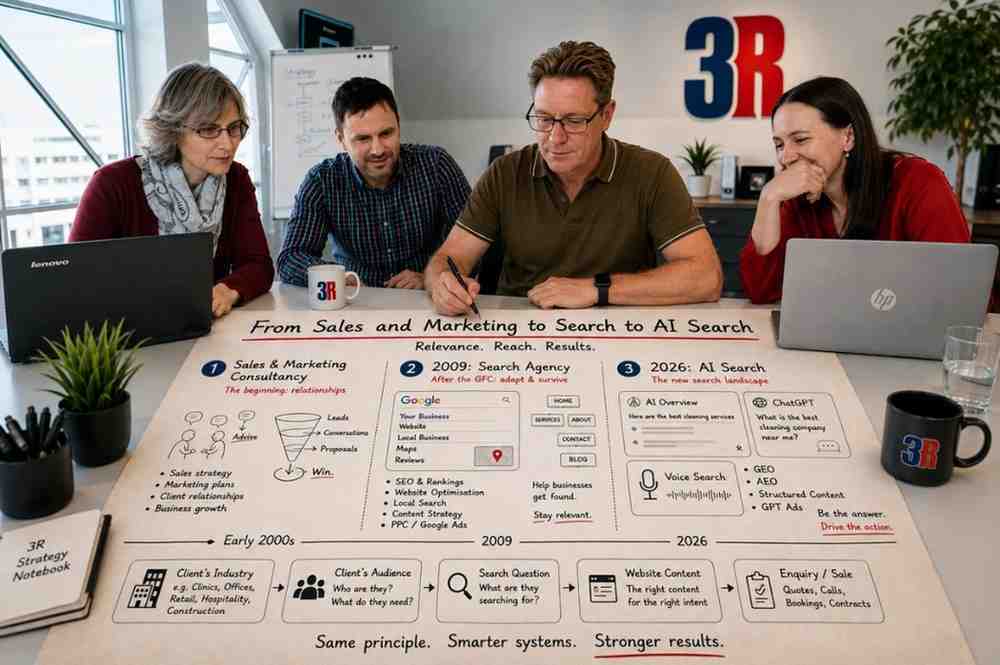
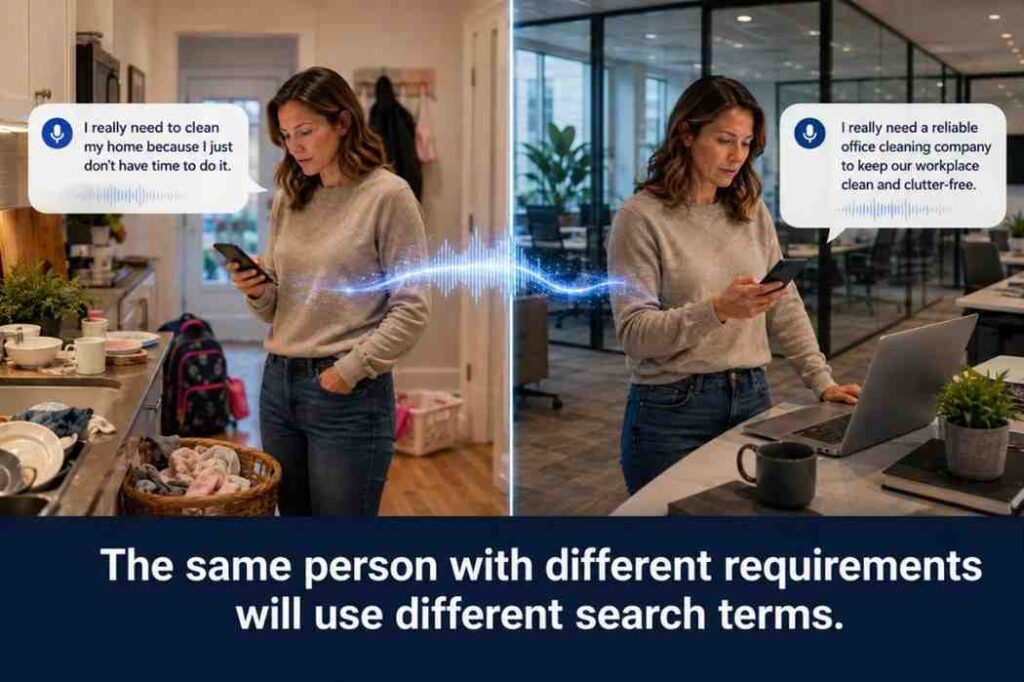
How to Get More Sales Online: 101 Expert Tips to Boost Website Traffic and Conversions
July 5, 2025
16 Real-World Examples of SEO Content That Attracts, Engages & Converts
August 27, 2025AI Search, Rich Snippets & Google AI Overviews: How to Optimise Landing Pages and Blogs for SEO in 2026

Updated for 2026:
This guide has been expanded to include the latest developments in AI search,Google AI Overviews, schema markup and generative search optimisation.Why Optimising Landing Pages and Blog Content for AI Search Is Essential in 2026
Search has changed dramatically over the past few years. In 2026, ranking on Google is no longer just about appearing in the traditional list of ten blue links. Your content now competes for visibility in featured snippets, Google AI Overviews, voice assistants and AI-generated answers from tools like ChatGPT, Gemini and Perplexity.
Businesses must now create AI-ready SEO content that both humans and machines can understand. .
How Is Google Search Changing With AI in 2026?
Google’s AI Overviews now appear at the top of many search results. Instead of simply showing links, Google generates a summary answer based on trusted sources.
Websites that provide clear answers, structured headings and schema markup are far more likely to appear in these summaries. Content must now be written so AI systems can easily extract and quote useful information.
- How Is Google’s Search Changing With AI?
Google’s Search Generative Experience (SGE) prioritises concise, high-quality answers that directly serve searcher intent. Sites that provide structured, informative, and keyword-aligned content are rewarded with visibility in these AI-generated summaries.
- Why Do AI Models Prefer Structured Content?
AI models like ChatGPT favour question-and-answer formats, short summaries, and schema-tagged data. This makes content easier to parse, quote, and link to in AI-generated search responses or assistant-style answers.
- What Are the Risks of Ignoring AI-Optimised SEO?
Without structure and schema, even great content becomes invisible to search engines. Your site may rank lower, miss featured snippets, and fail to appear in voice search or AI tools, losing trust, clicks, and conversions.
What Is AI SEO and Why Does It Matter for Businesses?
AI SEO refers to optimising website content so it can be understood, summarised and referenced by AI-powered search engines such as Google AI Overviews, ChatGPT and Perplexity.
Unlike traditional SEO which focused heavily on keywords, AI SEO focuses on clear answers, structured headings, schema markup and topical authority.
Businesses that structure their content clearly are far more likely to appear in AI-generated search responses.
How to Make Landing Pages SEO-Friendly and AI-Ready
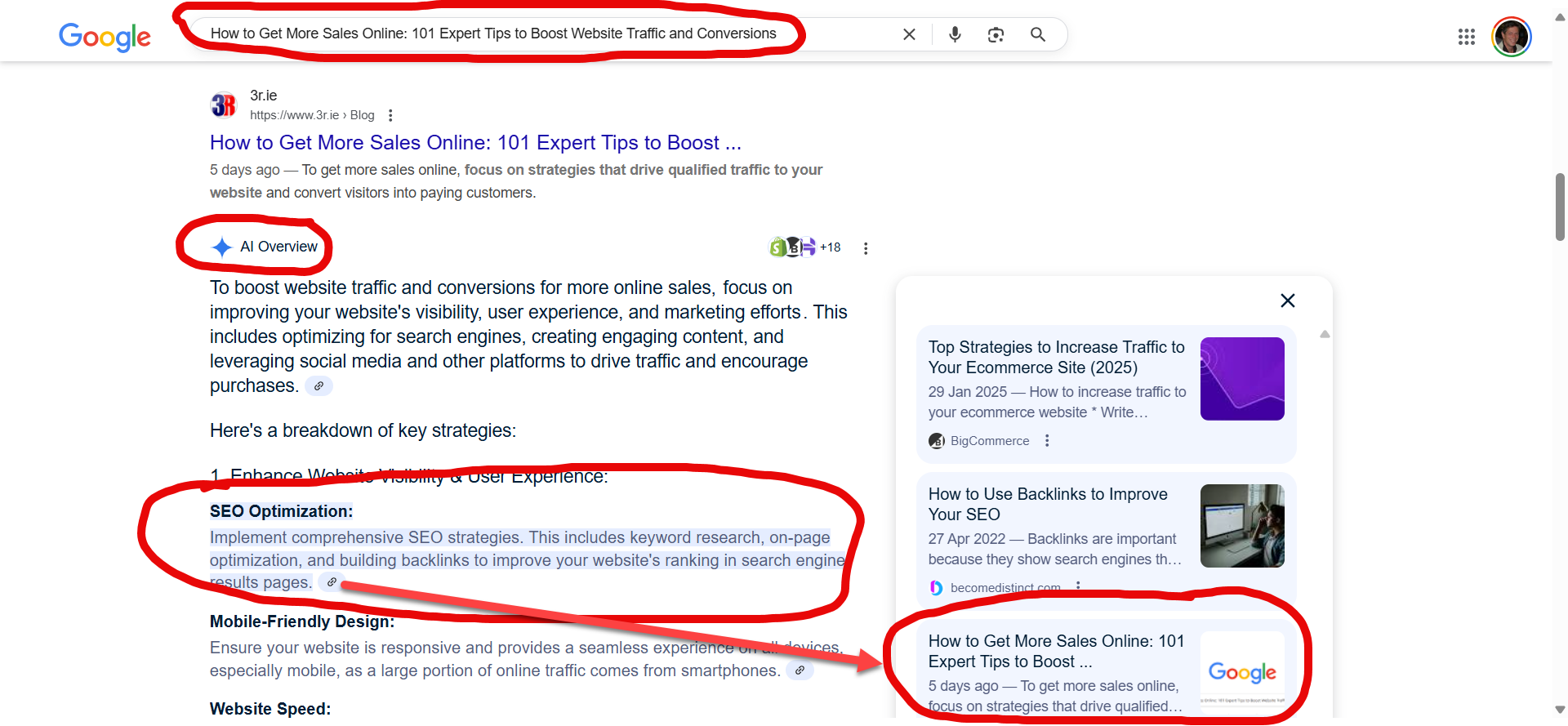
To rank in both organic and AI results, landing pages need compelling headings, schema markup, and fast-loading, mobile-first design. Align every element with buyer intent and machine-readable structure.
- How Should You Structure Headings on Landing Pages?
Use keyword-rich H1s and H2s that reflect real search queries. Phrase them as questions or benefits to align with “People Also Ask” and voice search formats.
- What Trust Elements Should Be Included?
Incorporate client testimonials, awards, and case studies. Use visual badges and short client quotes to create emotional credibility that search engines and users trust.
- How Does UX Impact SEO in 2025?
Fast-loading, mobile-optimised pages reduce bounce rates and improve user engagement. AI also favours pages with logical layout, scannable copy, and minimal friction.
- Why Is Buyer Intent Alignment Key?
Landing pages must match the searcher’s goal. Use persuasive NLP copy that mirrors visitor emotions and ends with strong, schema-enhanced calls to action.
What Blog Structure Helps You Win Featured Snippets and Voice Search?
Blogs that answer real questions in structured formats—like FAQs, bullet lists, and “how-to” steps—are more likely to be picked up by Google’s AI and voice search. First 250 characters are crucial.
- How to Write Snippet-Friendly Blog Intros
Start each blog section with a 250-character paragraph that directly answers the heading. Use keywords early, write naturally, and phrase it as a clear answer.
- Why Are Question-Based Headings Essential?
Google prioritises content that mirrors how users search. Headings like “What Is…”, “How To…”, or “Why…” signal snippet value and voice query relevance.
- What Blog Structures Work Best for AI?
Use nested headings, bullet points, and numbered lists. Embed relevant FAQs using schema, and keep paragraphs short and focused.
What Is Schema Markup and How Can You Use It to Get Rich Snippets?
Schema markup adds hidden labels to your content, helping Google understand what your post, page, or FAQ is about. It’s your ticket to rich snippets, voice results, and generative AI inclusion.
- What Types of Schema Should You Use?
For blogs: Article, FAQ, HowTo. For services: LocalBusiness, Service. For landing pages: WebPage, Review, Product, Breadcrumb.
- How Does Schema Improve SEO Performance?
It increases click-through rate, enhances visibility, and positions your content in AI results. Structured data tells Google how to feature your content.
- Why Should Irish Businesses Care?
For service-led industries in Ireland, rich snippets can differentiate local pages from global competitors. Schema builds trust and visibility in a crowded market.
How to Technically Implement Schema Markup for SEO and Rich Snippets
Schema markup for SEO is implemented using JSON-LD or Microdata formats, usually embedded in a page’s or inline with HTML. WordPress plugins can generate this automatically, but manual control offers advanced benefits.
What Is JSON-LD and Why Is It Recommended?
JSON-LD (JavaScript Object Notation for Linked Data) is the preferred format by Google for adding structured data. It is placed in the HTML and is separate from visible page content, reducing conflicts and making it easier to manage.
How Can You Write JSON-LD Schema Manually?
Use Schema.org templates and modify them to reflect your content. For example, an FAQ block might look like:
What Are Common Schema Errors to Avoid?
- Missing required fields (e.g., name, description)
- Using the wrong @type (e.g., using WebPage for a blog article)
- Invalid nesting or syntax errors
- Conflicts between manual and plugin-generated schema
Where Can You Validate Your Schema Code?
Use tools like:
- Google’s Rich Results Test
- Schema.org’s validator
- Chrome extensions like “Structured Data Testing Tool” These help ensure your code is error-free and eligible for snippets.
How to Add Schema Markup in WordPress Using Easy Plugins
WordPress makes schema simple. Use plugins like Rank Math, Schema Pro, or Yoast to add schema to blogs, pages, FAQs, and services—without coding a line.
Which Plugins Make Schema Easy?
- Rank Math – https://rankmath.com A comprehensive SEO plugin with built-in support for all common schema types. Its visual interface makes it easy for beginners, and its advanced options suit power users.
- Schema Pro – https://wpschema.com Perfect for adding complex or niche schema types like JobPosting or Course. It integrates well with custom post types and allows schema templates for automation.
- Yoast SEO – https://yoast.com Great for basic schema like Article, WebPage, and Breadcrumb. While not as advanced as Rank Math, Yoast is ideal for blogs and content-heavy sites with minimal technical setup.
These plugins help you insert schema automatically while allowing manual override when needed. Choose based on your site’s complexity, your technical comfort level, and the types of content you publish.
How to Add FAQ Schema in Elementor
Use FAQ blocks or schema-enhanced widgets. Fill out the Q&A format, and the plugin will auto-generate JSON-LD code in the background.
How to Test Your Schema
Use Google’s Rich Results Test or Schema.org Validator to verify schema accuracy. Ensure there are no errors or warnings that could block snippet eligibility.
Why Google Ads Now Require an AI-Aligned Strategy (And How to Do It Right)
Google Ads in 2025 demand smarter keyword targeting, AI-aware ad copy, and SEO-aligned landing pages. Keywords must match AI search phrasing, while ads must promise specific, structured value.
- How to Choose Keywords for AI Search
Use long-tail, question-style phrases (e.g., “best SEO plugin Ireland”). Focus on buyer intent and semantic matching rather than just broad match volume.
- How to Write Ads That Align with Rich Snippets
Craft headlines that ask a question or offer a solution. Use structured extensions (site links, callouts) to mimic a snippet layout and pre-answer queries.
- How to Design Landing Pages That Match the Ad
Ensure the landing page echoes the ad’s promise. Use the same keywords, embed schema, and structure it for fast reading and strong CTAs.
Where Most Irish Websites and Blogs Fail at SEO in 2025
The most common issues? Vague headings, weak intro paragraphs, and no schema markup. Even good content underperforms if it’s not structured for AI or rich snippets.
What Are Common On-Page SEO Mistakes?
- Weak or generic headings
- Long, fluffy intros without keyword alignment
- No internal links or schema usage
How Can You Fix Underperforming Content?
Start by rewriting with SEO-driven questions as headings. Add schema plugins, shorten intros, and test in Google’s snippet emulator or AI tools.
Why Content Structure Matters More Than Ever
Structure is now a ranking signal. AI tools need clear formatting to quote or surface your content—especially in “zero-click” and SGE formats.
How AI Search Actually Works in 2026
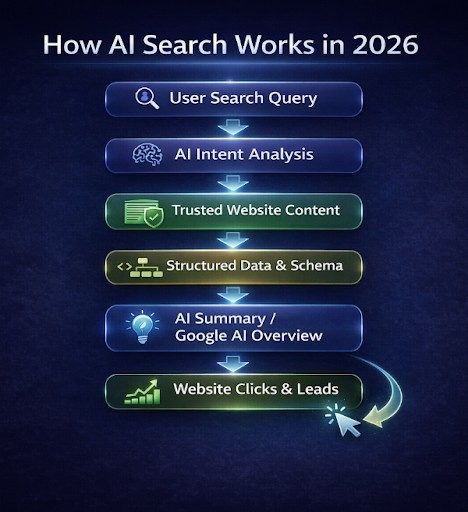
AI search engines no longer simply rank pages by keywords. Instead, they analyse content structure, authority signals, and user intent before generating answers.
Understanding this process helps businesses structure their websites so they can appear in AI summaries and featured results.
The Typical AI Search Process
- Query Understanding – The search engine interprets the user’s question using natural language processing.
- Source Discovery – The system scans trusted websites containing structured content.
- Content Extraction – Relevant sections of pages are analysed, including headings, summaries, FAQs and schema markup.
- Answer Generation – The AI generates a concise answer or summary.
- Source Attribution – The original websites may be cited as sources.
Websites that provide structured explanations and schema markup are far more likely to be used in AI-generated answers.
What Is Generative Engine Optimisation (GEO)?
Generative Engine Optimisation is the practice of creating content designed to be referenced by AI-powered search engines.
Instead of simply ranking in traditional search results, GEO focuses on making content easy for AI models to quote, summarise and cite.
This involves structured headings, clear answers, schema markup and strong topical authority.
Businesses that optimise for generative search can gain visibility in AI summaries and assistant responses.
What If You Optimised Your Entire Site for AI, Ads, and Rich Snippets?
Picture this: your landing pages appear in SGE results, your blogs land in “People Also Ask,” and your ads deliver lower CPC with higher ROI. This is what structured, AI-first content delivers.
What Could Rich Snippet Optimisation Deliver?
Expect higher CTRs, better ad Quality Scores, and stronger brand authority. With consistent schema and content alignment, even small websites can dominate niches.
How to Start a Full-Site Optimisation Strategy
- Audit current pages and content structure
- Install and configure schema plugins
- Rework blogs and ads to mirror AI-ready formats
Why Work With Experts Like 3R?
If you want to improve visibility in AI search, rich snippets, and Google results, professional SEO services can help align your content, schema markup, and landing pages with modern search algorithms.
Start with a free SEO audit from 3R to discover where your website stands and what improvements will deliver the biggest gains in traffic, rankings, and leads.
Ready to elevate your entire digital presence? Contact 3R for an AI-first content audit today.>
Technical Appendix: Schema Markup Implementation Guide for Web Designers
To ensure the blog article “How to Optimise Landing Pages, Blogs, and Google Ads for Rich Snippets and AI Search in 2025” is structured for optimal visibility in AI-generated search results and Google rich snippets using correct schema markup.
1. Use JSON-LD Format
All schema markup must use the JSON-LD format as recommended by Google. It should be placed in the section of the page or injected via a schema plugin.
Example: Insert this into the or using a plugin’s custom schema box:
{
“@context”: “https://schema.org”,
“@type”: “Article”,
“headline”: “How to Optimise Landing Pages, Blogs, and Google Ads for Rich Snippets and AI Search in 2025”,
“author”: {
“@type”: “Organization”,
“name”: “3R”
},
“datePublished”: “2025-07-09”,
“mainEntityOfPage”: {
“@type”: “WebPage”,
“@id”: “https://example.com/blog/seo-rich-snippets-ai”
},
“publisher”: {
“@type”: “Organization”,
“name”: “3R”,
“logo”: {
“@type”: “ImageObject”,
“url”: “https://example.com/logo.png”
}
}
}
2. Add FAQPage Schema Markup
For any FAQ-style sections, ensure each Q&A is wrapped with proper schema.
Option 1: Use Rank Math or Yoast FAQ blocks.
Option 2: Manually add JSON-LD like this:
{
“@context”: “https://schema.org”,
“@type”: “FAQPage”,
“mainEntity”: [
{
“@type”: “Question”,
“name”: “What Is Schema Markup and How Can You Use It to Get Rich Snippets?”,
“acceptedAnswer”: {
“@type”: “Answer”,
“text”: “Schema markup adds hidden labels to your content, helping Google understand what your post, page, or FAQ is about. It’s your ticket to rich snippets, voice results, and generative AI inclusion.”
}
},
{
“@type”: “Question”,
“name”: “How Should You Structure Headings on Landing Pages?”,
“acceptedAnswer”: {
“@type”: “Answer”,
“text”: “Use headings that echo real user queries and include SEO keywords. Phrase them as benefits or questions to align with featured snippet triggers.”
}
}
]
}
3. Use Plugin Recommendations
Preferred plugins:
- Rank Math Pro: Use its Schema Generator to select “Article” and “FAQPage”. Automatically detects heading structure.
- Schema Pro: Ideal for custom schemas per post. Assign FAQ and Article markup at the template level.
- Yoast SEO Premium: Supports article schema and breadcrumbs. Use FAQ block in Gutenberg for inline schema.
4. Validate Schema
Use both of the following tools before publishing:
Check for:
- No errors or warnings
- Correct @type values (e.g., Article, FAQPage)
- Accurate publisher, author, and URL details
5. Structured Data Best Practices
- Use only one main schema type per page (e.g., Article).
- Avoid mixing Microdata and JSON-LD.
- If combining plugins with manual schema, ensure no duplication.
- Maintain consistent meta data across schema and Open Graph tags.
- Keep snippets under 300 characters for AI-readability.
6. Optional Enhancements
Add the following schema types if applicable:
- BreadcrumbList for improved UX and indexing
- Organization or LocalBusiness schema in site footer or header
- WebPage schema with about, mainEntity, and description fields for advanced SEO support
Contact for Clarification
If anything is unclear, contact the SEO strategist at 3R for a review before deployment.