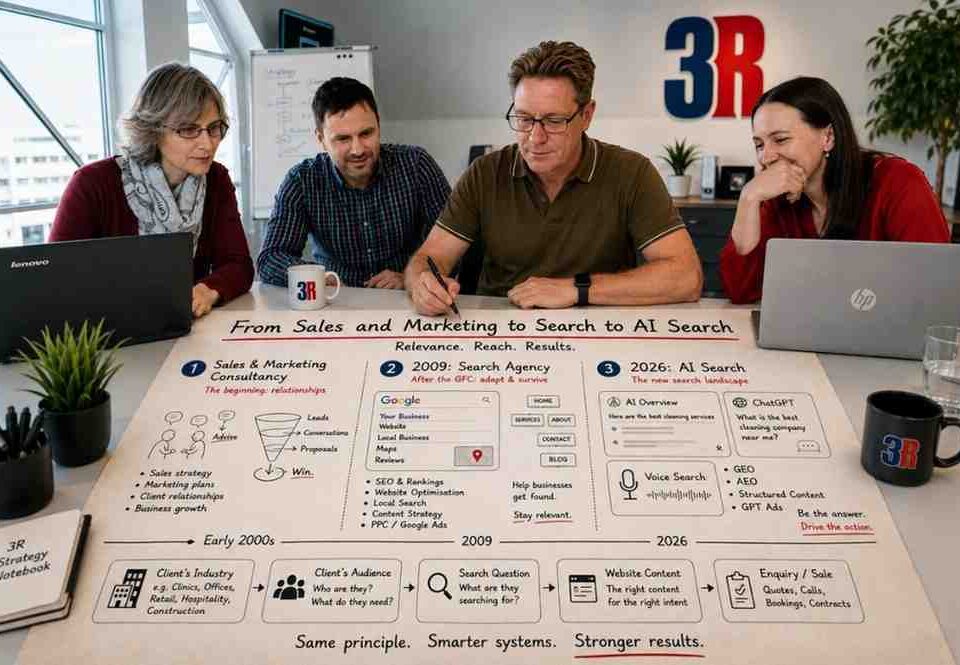
Google AI Search agency: Why 3R Uses Its Own System Before Selling It to You
August 7, 2026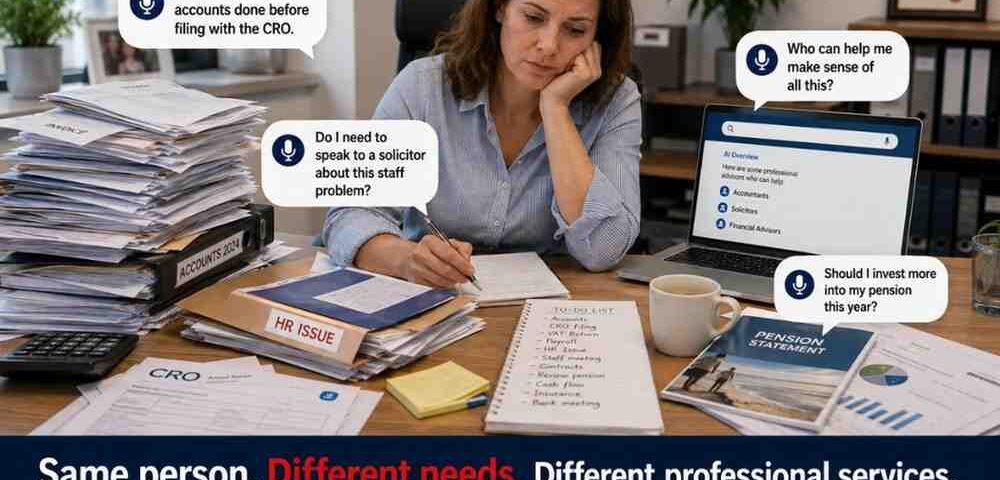
What Is Changing for Professional Services in Google AI Search?
Google AI Search for professional services is changing how people choose accountants, solicitors, tax advisors, estate agents, consultants, brokers and other trusted advisors. People are not just searching for a firm name. They are asking detailed questions before deciding who deserves the first enquiry.
That matters because professional services are rarely bought casually.
A person looking for an accountant may be worried about tax, compliance, payroll, company accounts, a Revenue issue or whether they are making poor financial decisions. Someone searching for a solicitor may be dealing with a property sale, a family matter, a dispute, a will, probate or a business risk. A person looking for an estate agent may be trying to understand valuation, timing, local demand and how to avoid underselling a property.
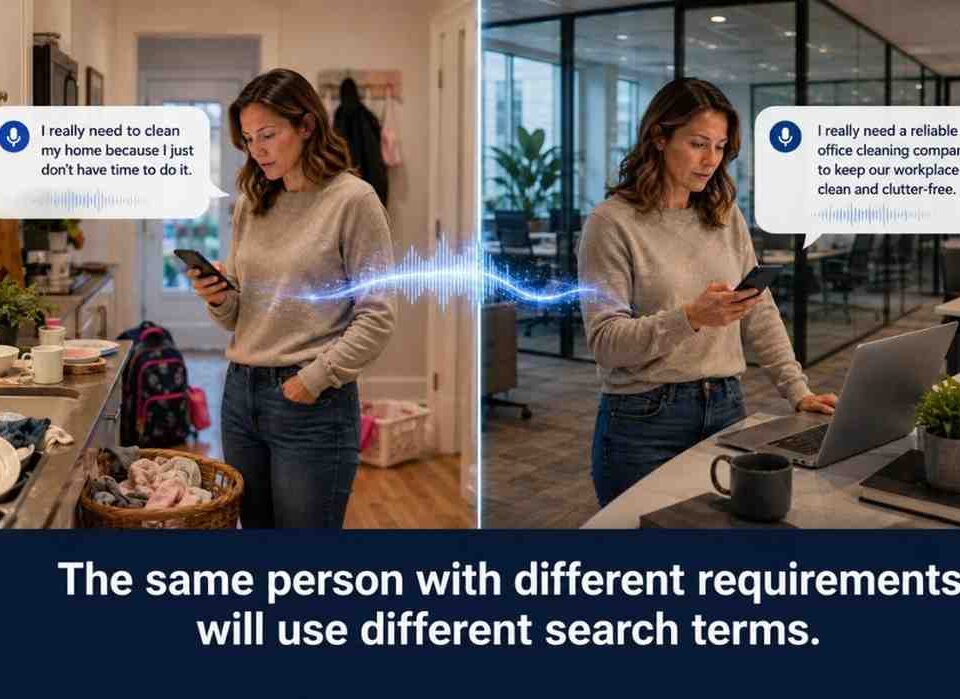
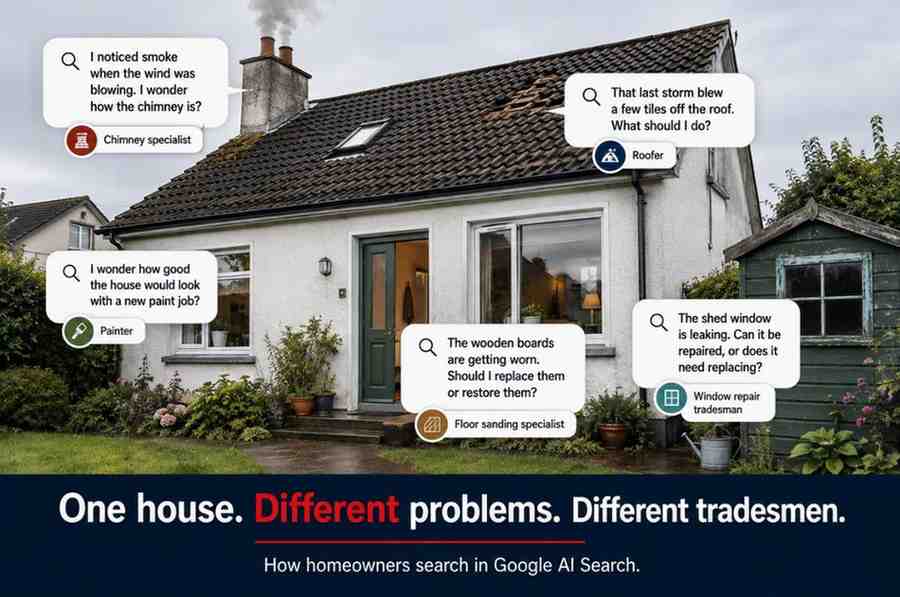
The search often begins before the person knows exactly what service they need.
They may ask:
- “Do I need an accountant for a small limited company?”
- “What should I ask a solicitor before buying a house?”
- “How do I choose an estate agent in my area?”
- “What does a tax advisor do for landlords?”
- “Can a business consultant help if sales have stalled?”
Google AI Search and AI Overviews can answer some of those early questions. They can explain broad concepts, outline common steps and summarise options. What they cannot do is understand the full circumstances, assess the risk, interpret the documents, review the figures, negotiate the issue or give the personal judgement a client is really looking for.
So the website has to do a more careful job. It has to give the person enough confidence to make contact.
Why Are Professional Service Searches So Trust-Led?
Professional service searches are trust-led because the client is often dealing with money, property, law, risk, compliance or a major personal decision. They are looking for reassurance that the person or firm understands the stakes.
Vague service pages tend to struggle here.
A page saying “we provide expert accountancy services” or “we are a client-focused legal firm” may be true, but it does not tell the reader enough. It does not show whether the firm understands landlords, small businesses, company audits, house purchases, probate, tax planning, valuations or business disputes.
The client wants to know whether you have seen their problem before.
For accountants, that may mean explaining audit obligations, income tax, VAT, payroll, company secretarial work or landlord tax in plain English. 3R’s SEO content examples include APM Accountants articles on audit services, company audit costs, non-resident landlord tax and company secretarial services, all aimed at turning technical expertise into useful search content. (3r.ie)
For solicitors, it may mean explaining the process before the client becomes overwhelmed by legal language. Holland Condon Solicitors praised 3R’s website design and SEO work, noting that the new website attracted positive comments from clients and that the SEO work had been excellent. (3r.ie)
Trust online is usually quieter than people think. A useful explanation, visible proof and a sensible route to contact will often do more than another broad claim about professionalism.
How Does the 3R Framework Apply to Professional Services?
The 3R framework helps professional service firms turn specialist knowledge into better enquiries. The firm has to be relevant to the client’s problem, reachable across search and AI channels, and set up to turn interest into a consultation, call, form enquiry or appointment.
For accountants, solicitors, tax advisors, estate agents and consultants, the work is not to make the service sound more complicated. Most professional services are complicated enough already.
The work is to make the complexity understandable.
Relevance is about matching your services to the real questions clients ask before they contact you. Reach is about making that expertise discoverable through Google Search, Google AI Search, local SEO, service pages, articles, testimonials and, where useful, paid search. Results are the enquiries that actually fit the kind of work the firm wants.
A professional service firm may already have the expertise. Much of it is usually hidden in conversations, emails, files, client meetings and years of judgement. The website should bring enough of that experience into view so a potential client can recognise the fit.
How Does Relevance Help Accountants, Solicitors and Advisors Attract Better Enquiries?
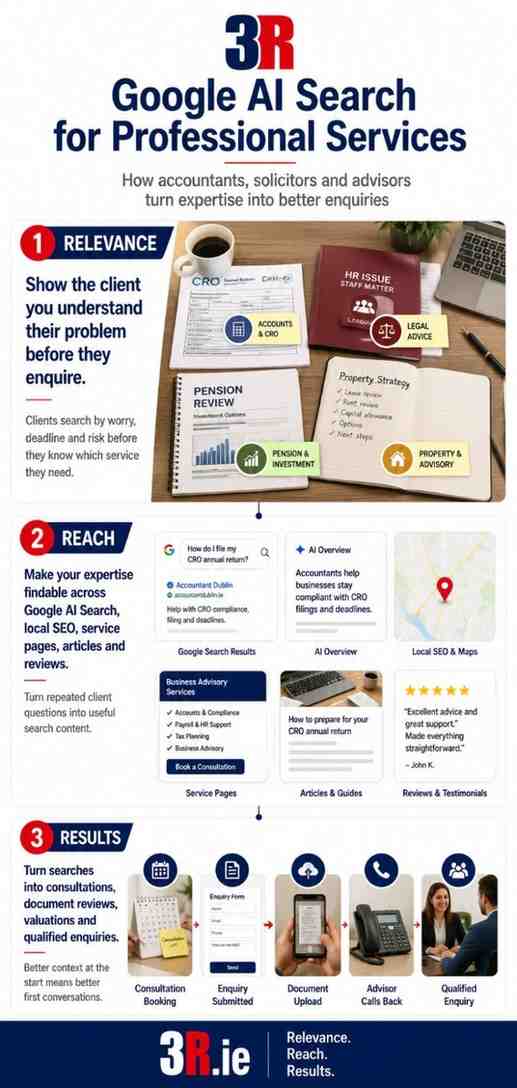
Relevance helps professional service firms attract better enquiries by connecting each service to the client’s real situation. A page should not just say “tax services” or “legal advice”; it should explain the problem, the risk, the likely process and the kind of help available.
A small business owner may not know whether they need bookkeeping, management accounts, tax planning, audit support or company secretarial advice. They may simply know that the numbers are becoming harder to manage.
A landlord may not search first for “non-resident landlord tax compliance”. They may search because rental income is coming from Ireland and they are unsure what Revenue expects.
A person selling a house may not understand the difference between valuation, marketing, viewings, negotiation and closing the sale. They just want to know who will handle the property properly and get the best practical outcome.
Useful professional service categories might include:
- accountants for small businesses
- tax advisors for landlords
- audit services for Irish companies
- solicitors for conveyancing
- solicitors for wills and probate
- estate agents for local property sales
- business consultants for stalled growth
Each category has a different client, different concern and different decision process.
APM Accountants is a strong example. Aidan McGrath said that after engaging 3R, their Google rankings significantly improved and they began getting a lot of contact through the website contact form. The commercial lesson is simple enough. The right people found the right information and felt confident enough to enquire.
How Does Reach Help Professional Firms Appear Across Google AI Search and Local Search?
Reach helps professional service firms appear where clients are already searching: Google Search, Google AI Search, Google Maps, local SEO, service pages, practical articles, testimonials, case studies and paid ads where appropriate.
For many professional firms, geography still matters. A person may want an accountant in Dublin, a solicitor in Kilkenny, an estate agent in their local area or a business consultant who understands the Irish market. Even where services can be delivered remotely, local trust and market knowledge can still influence the decision.
Search systems also need enough context to understand the relationship between the service, the client problem, the location and the proof. One broad “Services” page is rarely enough.
A better structure separates the firm’s expertise properly. For an accountant, that might include tax returns, company accounts, audit services, payroll, VAT, landlord tax and advisory work. For a solicitor, it might include conveyancing, probate, wills, family law, litigation or commercial advice. For an estate agent, it might include valuations, selling a home, letting a property and local area advice.
The point is not to create pages for the sake of it. It is to stop making the client and Google guess what the firm actually does.
Google Ads can still be useful for newer firms, competitive locations or urgent service lines, but they work best when they send people to a page that matches the search. Sending every enquiry to a vague homepage usually wastes money.
How Do Results Come From Better Consultation Journeys?
Results come when a professional services website makes it easy for the right client to take the next step. AI can explain a legal, tax or property topic, but the client still needs a qualified person to review the facts and give proper advice.
For professional services, the action gap is usually the consultation.
The client may need a call, an appointment, a document review, a quote, a valuation, a tax assessment, a legal consultation or a more private conversation before any real work can begin.
A good enquiry route should ask enough to make the first response useful, without making the person feel as if they are filling out a tax return before speaking to anyone.
Useful enquiry fields might include:
- service needed
- business or personal enquiry
- location
- urgency
- brief description of the issue
- document upload where appropriate
- preferred contact method
A solicitor may need to know whether the matter is property, probate or commercial. An accountant may need to know whether the enquiry concerns a company, sole trader, landlord or personal tax issue. An estate agent may need the property type and location before advising on the next step.
3R’s own testimonials show this commercial link clearly. APM Accountants reported improved rankings and more website contact form enquiries after working with 3R. (3r.ie) For professional firms, visitors are only useful when some of them become the right kind of contact.
What Should Professional Service Firms Do First for Google AI Search?
Professional service firms should start by turning their expertise into clear service pages, practical articles and enquiry routes that reflect how clients actually search. Google AI Search for professional services works best when the website explains the firm’s judgement, not just its service list.
How Should Professional Firms Map Their Client Categories?
Start by grouping services around the client’s situation, not the firm’s internal structure. A client rarely thinks in neat departmental headings. They think in problems, risks, deadlines and decisions.
An accountant’s client categories might include company directors, sole traders, landlords, employers or businesses preparing for audit. A solicitor’s categories might include home buyers, executors, separated couples, business owners, landlords or people making a will. An estate agent’s categories might include first-time sellers, landlords, homeowners downsizing or probate sales.
Smaller Irish firms can compete well here. They often understand recurring client problems in detail because they deal with them every week. The website needs to show that knowledge in plain language.
How Should Advisors Turn Experience Into Search Content?
Professional firms should turn repeated client questions into useful content. The best topics often come from meetings, emails, phone calls, document reviews and the questions clients ask just before they become serious.
An accountant can write about what a small company should know before an audit. A tax advisor can explain common landlord tax mistakes. A solicitor can explain what slows down a house purchase. An estate agent can explain what affects a valuation in a local market.
The writing should not sound like a textbook. It should sound like a professional who has explained the same issue many times and knows where people get confused.
Good content answers questions such as what the service involves, when advice is needed, what documents to prepare, what can delay the process, what mistakes to avoid and what happens after the enquiry.
That kind of content helps the client decide whether the firm is worth contacting.
How Should Professional Services Websites Create Better Enquiries?
Professional services websites create better enquiries by helping people identify the right service and explain enough of their situation before the first call. A vague contact form often leads to vague enquiries.
A better enquiry route might ask whether the matter is personal or business-related, which service area applies, whether there is a deadline, and whether documents are available to upload.
For professional services, reassurance matters too. The website should make it clear what happens after the enquiry is submitted, who may respond, whether the first conversation is exploratory, and whether the person should prepare anything.
This is especially important where the subject is sensitive, such as legal disputes, tax concerns, financial pressure or personal planning. The website should help the client take the first step with less uncertainty.
Why Should Professional Service Firms Avoid Generic SEO?
Professional service firms should be cautious with generic SEO because trust, judgement and authority matter more than search volume alone. A keyword-only approach may increase traffic while still failing to attract the right enquiries.
Generic professional services content tends to sound safe and forgettable.
“Trusted advisors.”
“Client-focused approach.”
“Tailored solutions.”
“Professional service.”
“Years of experience.”
Most of those claims may be true, but they do not tell the client enough.
A better page shows judgement. An accountant explains what audit preparation actually involves. A solicitor explains what can delay conveyancing. An estate agent explains why two similar houses may attract different buyer interest. A consultant explains why a sales problem may not be a sales problem at all, but a positioning issue.
Professional services are built on judgement gained through repeated experience. SEO should not flatten that into generic copy.
How Does Professional Services SEO Fit Into a Wider AI Search Strategy?
Professional services SEO works best when service pages, articles, FAQs, testimonials, case studies and enquiry routes support one another. Isolated pages are weaker than a connected body of useful, experience-led content.
A client may arrive through one small question. They may want to know whether they need an accountant, how conveyancing works, what affects a house valuation, or whether a tax issue needs professional advice. The website then has to help them move from that question to the right service, the right proof and the right next step.
For a broader explanation of how Google AI Search is changing SEO, AEO, GEO and website structure, read the main 3R article here:
What FAQs Do Professional Service Firms Ask About Google AI Search?
What Is Google AI Search for Professional Services?
Google AI Search for professional services refers to AI-generated answers and summaries that appear in or around search results. For accountants, solicitors and advisors, it means clients may get initial guidance before choosing which firm to contact.
Can Accountants and Solicitors Still Get Enquiries From Google AI Search?
Yes. AI can explain general topics, but it cannot assess a client’s exact figures, documents, risks or circumstances. The website needs to make the next step clear and credible.
How Should Professional Firms Write Content for AI Search?
Write from real client experience. Explain the issue, the likely process, what the client should prepare, what can go wrong and when professional advice is needed.
Does Local SEO Still Matter for Professional Services?
Yes. Many clients still prefer firms with local knowledge, especially for accountancy, legal work, property and advisory services. Google Business Profile, local pages, reviews and clear contact details still matter.
Should Professional Service Firms Use Google Ads While SEO Develops?
In many cases, yes. Google Ads can support visibility while SEO matures, especially for competitive services or newer firms. The ads should send people to relevant service pages, not a vague homepage.
Can 3R Help Professional Service Firms Be Found in Google AI Search?
Yes. 3R helps professional service firms become easier to find, easier to understand and easier to contact through Google AI Search, SEO, AEO, GEO, WordPress website redesign and better enquiry journeys.
We have worked with enough Irish service businesses to know that the expertise is usually already there. It is often hidden in client conversations, advisory emails, files, meetings, case histories and years of professional judgement.
If your accountancy, legal, property, consultancy or advisory website is not showing up clearly in search, 3R can review whether it presents your services, proof, authority and enquiry route in a way clients can understand.
A Relational Strategy Session looks at the relationship between your firm, your audience and the search systems connecting the two. An AI Search Visibility Audit looks more specifically at where your website may be unclear, where content is thin, where Google or AI systems may struggle to understand the firm, and where enquiries may be leaking.