Google AI Search for Tradesmen: How Real Home Repair Expertise Wins Better Leads
August 4, 2026
Google AI Search agency: Why 3R Uses Its Own System Before Selling It to You
August 7, 2026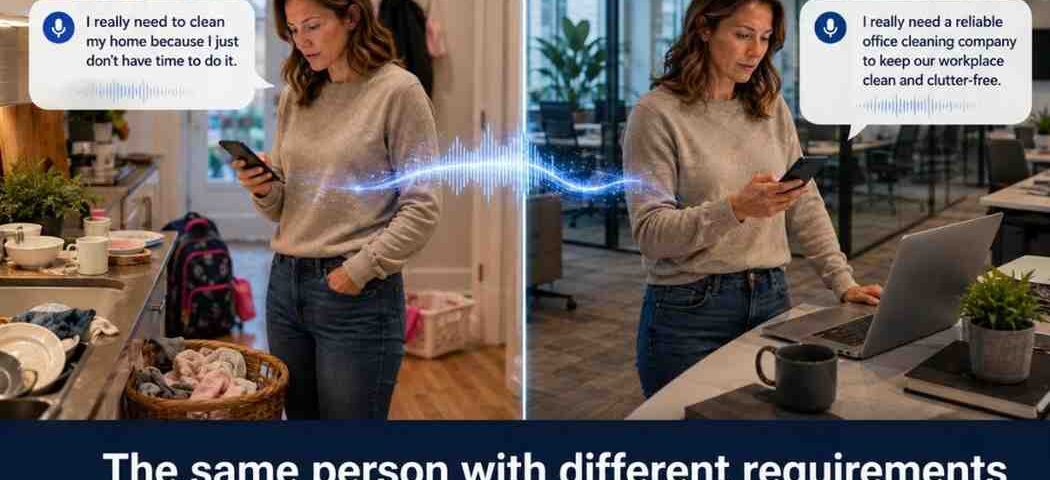
What Is Changing for Cleaning Companies in Google AI Search?
Google AI Search is changing how people choose cleaning companies. Customers are no longer searching only for “cleaner near me”; they are asking more specific questions about domestic cleaning, office cleaning, post-build cleans, hygiene standards, hospitality cleaning and trusted local providers.
For cleaning companies, this matters because the word “cleaning” covers a lot more than people think.
A homeowner looking for help because the house has become unmanageable is not the same as a builder needing a post-construction clean. A hotel manager preparing for a busy weekend is not the same as a clinic manager who needs cleaning carried out to a more careful routine. An office manager looking for daily cleaning has different concerns again.
The old SEO approach might have been to rank for “cleaning company Dublin” or “commercial cleaners Ireland”. Those terms still have a place, but they are too broad on their own.
People now search in a more practical way:
- “Who can clean my house before Christmas?”
- “What is included in a post-build clean?”
- “How often should an office be professionally cleaned?”
- “What cleaning standards are needed for a medical clinic?”
- “Can a cleaning company clean after a party or event?”
Google AI Search and AI Overviews can answer some of these questions directly. The company still has to show why it is the right one to contact.
For experienced cleaners, that is not bad news. It gives them a chance to show the real judgement behind work that is often treated as if it were simple.
Why Are Cleaning Searches More Complicated Than They Look?
Cleaning searches are practical, emotional and often urgent. The customer may need help because they are overwhelmed, preparing for visitors, reopening a workplace, managing hygiene expectations or recovering from building work.
A domestic cleaning customer may be a busy parent, an older person who needs support, a professional with no time, or a family getting the house ready before Christmas. They may not want to feel judged. They want help that feels reliable, discreet and manageable.
A post-build cleaning customer has a different problem. They are dealing with dust, plaster residue, paint marks, debris and the final stage before a property can be handed over or lived in.
Commercial cleaning is different again. An office manager is thinking about staff, visitors, keys, access, insurance, presentation and consistency. They do not want to chase the cleaner every week. They want the job done properly without fuss.
Hospitality and medical cleaning bring their own pressures. A restaurant, hotel, gym, clinic or care setting does not just need “a clean”. It needs the right standard of cleaning for the environment, at the right time, with the right level of reliability.
The best cleaning companies already understand these differences. Their websites often do not show it clearly enough.
How Does the 3R Framework Apply to Cleaning Companies?
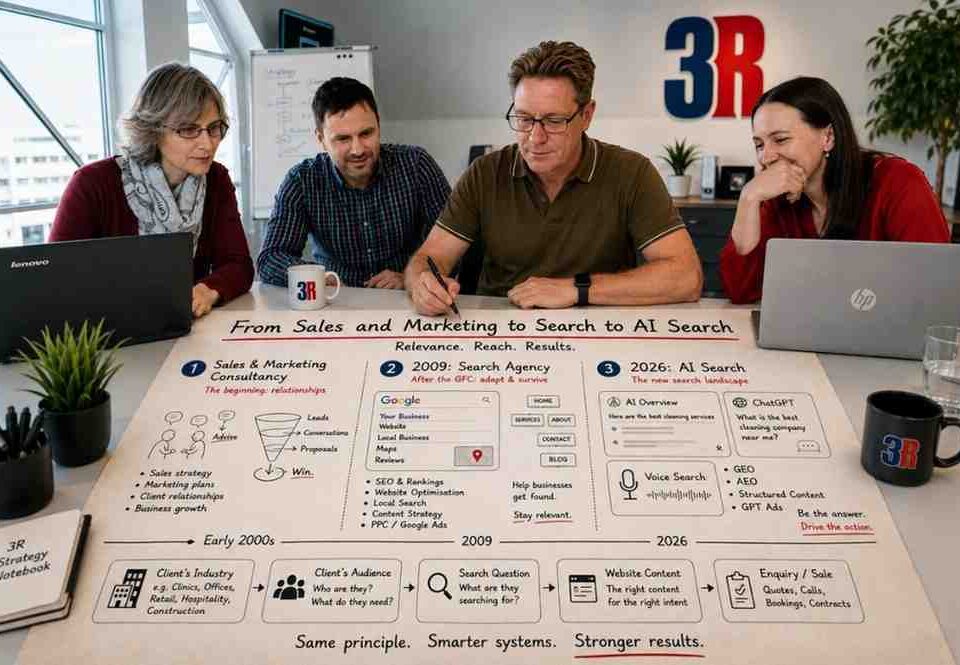
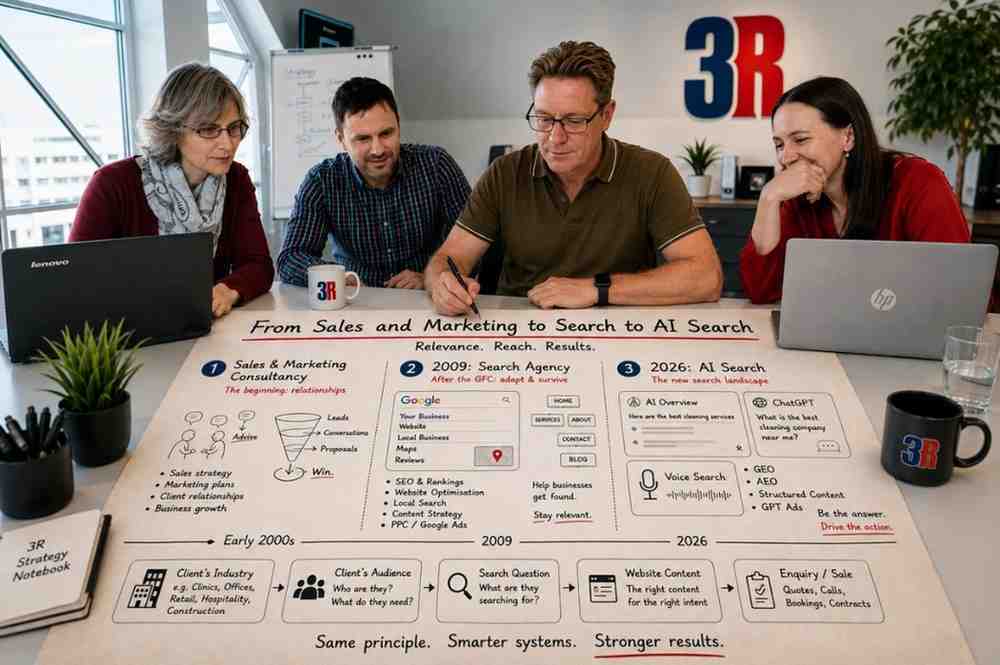
The 3R framework helps cleaning companies turn service knowledge into search content that attracts better enquiries. The company must be relevant to the customer’s situation, reach them across search and AI channels, and turn that interest into a booking, call or quote request.
This is not about making cleaning sound more complicated than it is. It is about showing the expertise already there.
Over time, we have seen the same pattern across strong cleaning campaigns. The company separates different customer needs. It explains the job properly. It shows proof where proof matters. It makes it easy for the right person to enquire.
A cleaner may know the difference between a regular domestic clean, a deep clean, an end-of-tenancy clean, a post-build clean and a commercial contract. The customer may not. Google may not either, unless the website explains it.
3R helps cleaning companies make their service categories visible, not just their keywords.
How Does Relevance Help Cleaning Companies Attract the Right Customers?
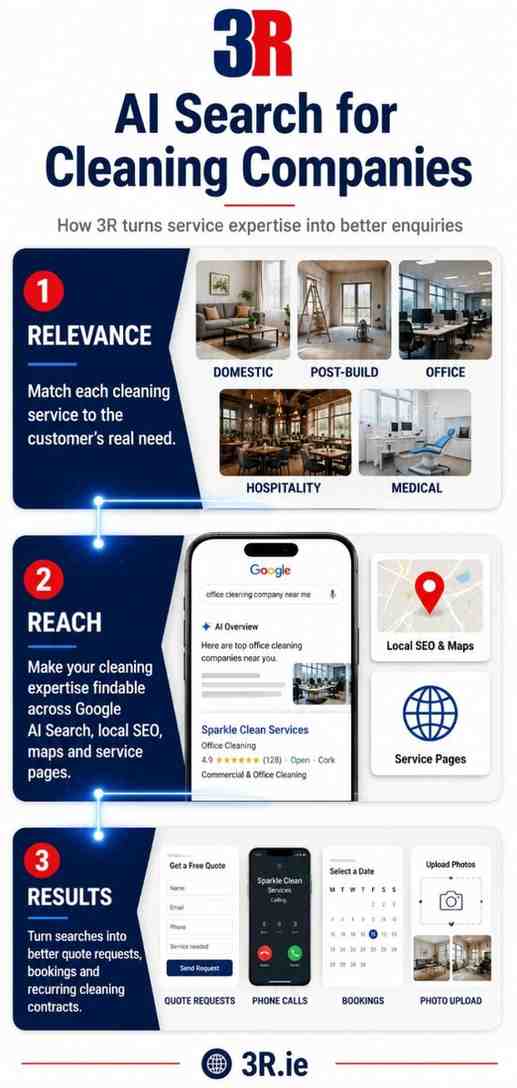
Relevance helps cleaning companies attract better enquiries by matching each cleaning service to the real reason someone is searching. A page should not just say “cleaning services”; it should show who the service is for, what problem it solves and what standard the customer can expect.
A cleaning company that presents every service in the same way often ends up with mixed enquiries.
The person searching for domestic cleaning may care about trust, routine and relief. Someone searching for post-party cleaning may care about speed and discretion. A family searching before Christmas may need help getting the house presentable before guests arrive.
Commercial cleaning has its own buying logic. An office manager may care about consistency, access, staff comfort and the impression made on clients. A hospitality manager may care about turnaround times, floors, toilets and busy trading hours. A medical facility may need a more careful explanation of hygiene routines and reliability.
Useful service categories might include:
- domestic cleaning for busy households
- deep cleaning before guests or festivities
- post-build cleaning after renovation work
- end-of-tenancy cleaning
- office cleaning
- hospitality cleaning
- medical or clinic cleaning
Each category deserves its own explanation because each customer has a different reason for searching.
This is where cleaning companies can show real experience. Not with polished phrases like “professional and reliable”, but by explaining how they work, what they clean, what the client needs to prepare, how timing is handled, and what happens if the job turns out to be bigger than expected.
3R’s work with cleaning clients shows why this matters. The Cleaning Company came to 3R after struggling to control Google Ads costs, and 3R helped steady the ship. That was not only a paid ads issue. When the search, ad, page and enquiry route are not aligned, money gets wasted.
How Does Reach Help Cleaners Appear Across Google AI Search and Local Search?
Reach helps cleaning companies appear where customers are already looking: Google Search, Google AI Search, Google Maps, local SEO, service pages, AI-style answers, voice search and paid ads where needed.
Cleaning searches are often local and immediate. Someone may search on a phone while standing in a dusty newly renovated kitchen. An office manager may search after another complaint from staff. A landlord may need a flat cleaned before new tenants move in.
The website and search presence have to support that kind of demand.
Your Google Business Profile should be accurate. Service areas should be clear. Each main cleaning service should have a useful page. Reviews and testimonials should be easy to find. The enquiry route should not make people work too hard.
For some cleaning businesses, Google Ads can still be useful, especially where demand is urgent or competition is high. But ads become expensive when they send the wrong people to the wrong page.
Loreto Cleaning provides a useful proof point here. 3R’s work helped the company generate a considerable lift in quality leads. The word “quality” matters. A cleaning company that wants office contracts should not spend its whole budget attracting once-off domestic jobs. A post-build cleaner should not be buried under general cleaning copy.
Reach only works properly when the category is clear.
How Do Results Come From Better Booking and Quote Journeys?
Results come when a cleaning company website turns a search into a useful enquiry. AI can explain what a deep clean or office clean includes, but the customer still needs a company to price the job, confirm availability and carry out the work.
For cleaning companies, the action gap is usually the booking or quote request.
A good cleaning enquiry form should ask the right questions without making the person feel they are filling out a government form:
- What type of cleaning is needed?
- Is it domestic, commercial, post-build or specialist?
- Where is the property?
- How soon is the clean required?
- Is it once-off or recurring?
- Can the customer upload photos?
Those details make the first conversation better. They also help filter poor-fit enquiries.
A commercial cleaning company may want recurring office contracts, not small once-off jobs outside its area. A domestic cleaner may want regular weekly or fortnightly clients, not emergency deep cleans with unrealistic expectations.
Diamond Shine is a good illustration of the commercial point. They credited 3R with making their Google campaign effective again and improving the website. A paid campaign cannot carry the whole job. The website still has to explain the service, build trust and make the next step obvious.
What Should Cleaning Companies Do First for Google AI Search?
Cleaning companies should start by separating their services into clear categories, then build useful pages around real customer situations. The aim is to help Google AI Search understand what the company does while helping customers feel comfortable asking for a quote.
Here are the first three steps we would prioritise.
How Should Cleaning Companies Map Their Service Categories?
Start by mapping your cleaning services around the customer’s situation, not just the task. Domestic cleaning, post-build cleaning, office cleaning, hospitality cleaning and medical cleaning all involve different levels of urgency, trust, access and standards.
A simple category map might look like this:
- Domestic cleaning: busy households, overwhelmed parents, older clients, pre-festive cleans, post-party cleans and regular support.
- Post-build cleaning: builders, homeowners, landlords and renovation projects where dust, debris and finishing detail matter.
- Commercial cleaning: offices, shops, schools, gyms and facilities where reliability, consistency and presentation matter.
- Hospitality cleaning: hotels, restaurants, cafés and venues where turnaround time and customer experience matter.
- Medical or clinic cleaning: environments where hygiene expectations, routine and care matter more than broad claims.
If the website treats all of these as the same service, the customer has to do too much work.
How Should Cleaners Turn Experience Into Search Content?
Cleaners should turn daily experience into useful content by explaining common jobs, standards, preparation, timing and problems customers often overlook. Most cleaning companies already know far more than their website shows.
The useful material is usually sitting in customer messages, before-and-after photos, quote notes, job sheets, checklists, site instructions and staff experience.
A post-build clean can become an article about what builders and homeowners should expect after renovation work. A recurring office contract can become a guide to keeping workplaces presentable without disrupting staff. A pre-Christmas domestic clean can become a practical page for homeowners preparing for visitors.
This does not need to become long-winded. It just needs to answer the questions customers ask before they are ready to book.
What is included? How long does it take? What should the customer prepare? Do you bring supplies? Can the clean happen outside working hours? Do you clean after builders? Can you handle recurring commercial work?
Good cleaning content sounds practical because the work is practical.
How Should Cleaning Websites Create Better Enquiries?
Cleaning websites create better enquiries by guiding the customer towards the right service and collecting enough information before the first call. A vague contact form usually leads to vague enquiries.
A better cleaning enquiry route asks about property type, cleaning type, location, timing, frequency and access. For larger jobs, photo uploads can save everyone time.
For commercial cleaning, the form may ask about floor area, opening hours, washrooms, kitchens and required cleaning frequency. For domestic cleaning, it may ask about bedrooms, bathrooms, pets, access and whether the clean is once-off or recurring.
The point is not to make the form awkward. It is to help the customer ask for the right thing, so the cleaning company can respond faster and quote better.
Why Should Cleaning Companies Avoid Generic SEO Agencies?
Cleaning companies should be cautious with generic SEO because cleaning is not one service. Domestic, post-build, commercial, hospitality and medical cleaning all have different customers, standards and buying reasons.
A generic SEO approach may chase search volume without separating those categories properly. That can lead to traffic, but not the right work.
The issue is not always that the agency knows nothing about SEO. It is more often that the campaign treats a domestic cleaner, office cleaning contractor and specialist post-build team as if they are selling the same thing.
Cleaning content can also fall into bland claims very quickly.
“Reliable cleaning.”
“Professional service.”
“Affordable rates.”
“Fully trained staff.”
Those claims may be true, but almost every competitor says them. What matters is the proof behind them: the type of properties cleaned, the standards followed, the problems solved, the timing required and the trust needed to work in someone’s home or business.
The best cleaning companies have authority because they know their work in detail. SEO should bring that detail to the surface.
Where Should Cleaning SEO Connect Back to the Wider AI Search Strategy?
Cleaning SEO should connect back to the wider AI Search strategy through the main pillar article, industry landing pages, service pages, testimonials, case studies, local search assets and practical cleaning content.
This article belongs inside the wider 3R industry network.
The main pillar article explains the broader shift from traditional Google rankings to AI Search, AEO, GEO, voice search and action-gap thinking. This cleaning article shows how that shift applies to domestic cleaners, office cleaners, post-build cleaning companies, hospitality cleaning teams and specialist commercial cleaners.
From here, the internal network should connect to:
- the main AI Search pillar article
- a cleaning companies industry landing page
- SEO and AI Search services
- WordPress website redesign services
- Google Ads management where relevant
- testimonials from cleaning clients
- service pages for domestic, commercial and specialist cleaning
A cleaning business owner should be able to move from the industry problem, to the wider AI Search shift, to proof, to a practical next step with 3R.
Read the main pillar article here:
What FAQs Do Cleaning Companies Ask About Google AI Search?
What Is Google AI Search for Cleaning Companies?
Google AI Search refers to AI-generated answers and summaries that appear in or around search results. For cleaning companies, it means customers may get advice about domestic cleaning, office cleaning, post-build cleans or hygiene standards before choosing who to contact.
Can Cleaning Companies Still Get Leads From Google AI Search?
Yes. AI can explain cleaning options, but the customer still needs a local company to confirm availability, price the job and carry out the work. The website has to make that next step easy.
How Should Cleaning Companies Write Content for AI Search?
Write around real customer situations. A page about post-build cleaning, office cleaning or pre-Christmas deep cleaning will usually be more useful than one broad page called “Cleaning Services”.
Does Local SEO Still Matter for Cleaning Businesses?
Yes. Cleaning is usually local or regional. Google Business Profile, service areas, reviews, local pages and clear contact routes still matter.
Should Cleaning Companies Use Google Ads While Building SEO?
In many cases, yes. Google Ads can help generate enquiries while SEO matures, especially in competitive local markets. The ads need to send people to the right service page, not a vague homepage.
Can 3R Help Cleaning Companies Be Found in Google AI Search?
Yes. 3R helps cleaning companies become easier to find, easier to understand and easier to contact through Google AI Search, SEO, AEO, GEO, WordPress website redesign and better enquiry journeys.
We have worked with cleaning clients where the issue was not simply “more traffic”. It was getting the right kind of enquiries, controlling wasted ad spend and making sure the website explained the service properly.
Domestic cleaning, post-build cleaning, office cleaning, hospitality cleaning and medical cleaning are not the same buying decision. Your website should not treat them as if they are.
If your cleaning company is not showing up clearly in Google AI Search, local search or AI-style answers, we can help you see where the gaps are.
Book a Relational Strategy Session or request an AI Search Visibility Audit.
We will look at how relevant your website is to the cleaning work you want, how well you reach local searchers, and whether your website turns interest into proper enquiries.
Start with the main AI Search pillar article here
The next customer may already be searching for the exact cleaning service you provide. The question is whether your website gives them enough practical detail to choose you.